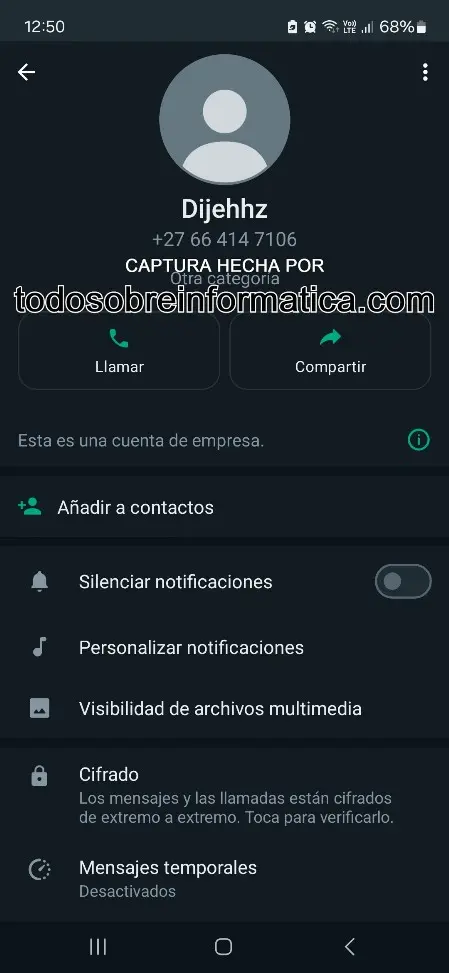
A reader told the site that an unfamiliar WhatsApp account sent a message saying “hola” (“hello”). The number shown was +27 66 414 7106, and the profile name was recorded as Dijehhz. The reader chose not to reply.
The account details are preserved from the original report. The sender's identity, intentions and current ownership of the number have not been established. A foreign prefix or a simple greeting is not, by itself, proof of fraud.
The original screenshots

How did the sender get the number?
The source identifies the +27 prefix with South Africa, but that does not establish where the person was physically located. More importantly, the report does not establish how they obtained the recipient's number.
The Spanish article proposes a scenario involving attractive job advertisements and forms collecting a name, email address and phone number. Such a scenario is not evidence that this reader completed such a form or that this particular account operated one. The available material contains only the reported greeting and profile details.
Handling an unwanted approach
You are not obliged to reply to an unfamiliar contact. If a conversation is unwanted, use the app's blocking or reporting tools as appropriate. Do not disclose passwords, verification codes, documents or financial details to find out who a stranger is.
If someone later claims to represent a company, verify that relationship independently. The wording of a greeting and the country code alone cannot establish whether a business is genuine.
You may describe a similar experience in the comments, but avoid posting private phone numbers or treating assumptions about the sender as proven facts. A separate job-offer report contains an actual earnings promise; it is not presented as connected to this greeting.
Comments (0)
Comments are shown in their original language.
No comments have been published yet. Be the first to join the conversation.